

The short answer
Local improvements can show within weeks; competitive organic rankings usually take six to twelve months, and longer in saturated practice areas and big metros. Signed cases lag rankings, because someone has to find you, decide, and call. The order matters more than the calendar: local and technical fixes land fastest, and content and off-site corroboration are what hold the position once you have it.
The honest answer is four months to a year before SEO turns into signed cases, and closer to the far end of that if you're in a competitive practice or a big metro. Not rankings in 30 days. Cases in two to four quarters. That's not a FirmForte hedge. It's roughly what Google itself tells firms hiring an SEO, and it's what the search engine's own former spokesperson said on the record.
If you understand why it takes that long, you can tell the difference between an agency that's working and one that's stalling. Here's the real timeline, stage by stage.
What does "SEO working" even mean for a law firm?
For a firm, "working" doesn't mean rankings. It means signed cases from organic search. That's the only number that pays for the retainer, and it sits at the end of three stacked delays: Google taking months to trust your changes, keywords climbing to where people click, and a potential client's own slow decision to call a lawyer at all.
This matters because a lot of SEO reporting measures the wrong finish line. An agency can show you keywords moving from position 40 to position 12 in month two and call it progress. It is progress, technically. But position 12 is page two, nobody clicks page two, and no case came from it. Rankings are a leading indicator. Cases are the result. Keep your eye on the second one and judge the timeline by it.
How long until anything moves at all?
Expect the first measurable movement six to twelve weeks after the foundation is in: rising impressions in Search Console, long-tail keywords entering the top 20, a small uptick in traffic. It's real, and it tells you the site is being crawled and reconsidered. It is not revenue yet. Treat it as a pulse, not a paycheck.
The month-by-month pattern is well documented across the SEO field. Months one and two are groundwork: technical fixes, schema, page optimization, new content going live, with only slight movement in the data. Months three and four are where early keywords start to climb and quick wins from on-page work surface. By months five and six, more terms reach the first page and organic traffic becomes something you can actually see in a chart. The engine is slow on purpose. It's deciding whether to trust you.
When do the calls actually start?
For most solo and small firms, qualified organic calls become a steady trickle around months six to nine, then compound from there. Google's Maile Ohye put the window plainly: most sites need "four months to a year" to implement improvements and see the benefit. Legal adds its own lag, because people call a lawyer when the problem gets urgent, not the day they first land on your page.
That last point is specific to this profession and it's easy to miss. Someone reading your page on "what happens if you miss a custody exchange" may not need you for six weeks, or six months, or ever. They bookmark, they think, and they call when the situation forces it. So even after your rankings are strong, there's a buying-cycle delay baked into legal that a plumber's website doesn't have. Google's John Mueller has noted the timeline "depends" heavily on the scale of what changed; for a law firm, it also depends on how long your clients take to decide they have a problem worth paying to solve. The four-months-to-a-year figure Search Engine Land traces back to Google is the planning number to hold in your head.
Why does it take that long?
Three things set the pace: how much competition and domain trust you're up against, how much your practice area is searched and how valuable each case is, and the legal decision cycle on top. A niche practice in a mid-size city moves faster than personal injury in a major metro, where you're fighting firms that have spent years and six figures building authority.
Domain trust is the one people underestimate. A brand-new domain, or a site that's never had real content, starts with nothing banked. Google has no track record to lean on, so it waits and watches. An established firm site with a few years of history and some existing links will move noticeably faster than a fresh build, because part of the trust is already there. If you're starting cold, the first two quarters are partly just Google getting comfortable that you exist and you're real.
What makes it faster, and what makes it slower?
The levers that actually change your timeline, roughly in order of impact:
- Existing site authority. An older domain with content and links banked ranks faster than a new one. You can't fake this, but you can stop resetting it by rebuilding your site and dropping your URLs every two years.
- Content velocity and quality. Publishing real, answer-first practice-area pages consistently beats one big burst then silence. This is the input you most control.
- Technical foundation. A site an engine can crawl and read without a fight (fast, clean HTML, proper schema) starts banking trust sooner. A slow, builder-bound site drags the whole timeline.
- Local versus organic intent. The local map pack can produce calls faster than organic rankings for near-me searches, so a firm leaning on local work may see the phone move before the blog does.
- Competition in your practice and metro. The one lever you don't control. Price your patience to it.
How do you tell it's working before the cases arrive?
Watch the leading indicators, because they move months before the phone does. Rising impressions in Google Search Console, long-tail keywords climbing into the top 10, your firm starting to show up in AI answers, and form-starts ticking up are all signs the engine is trusting you more. If those move by month three or four, you're on track even while it's quiet.
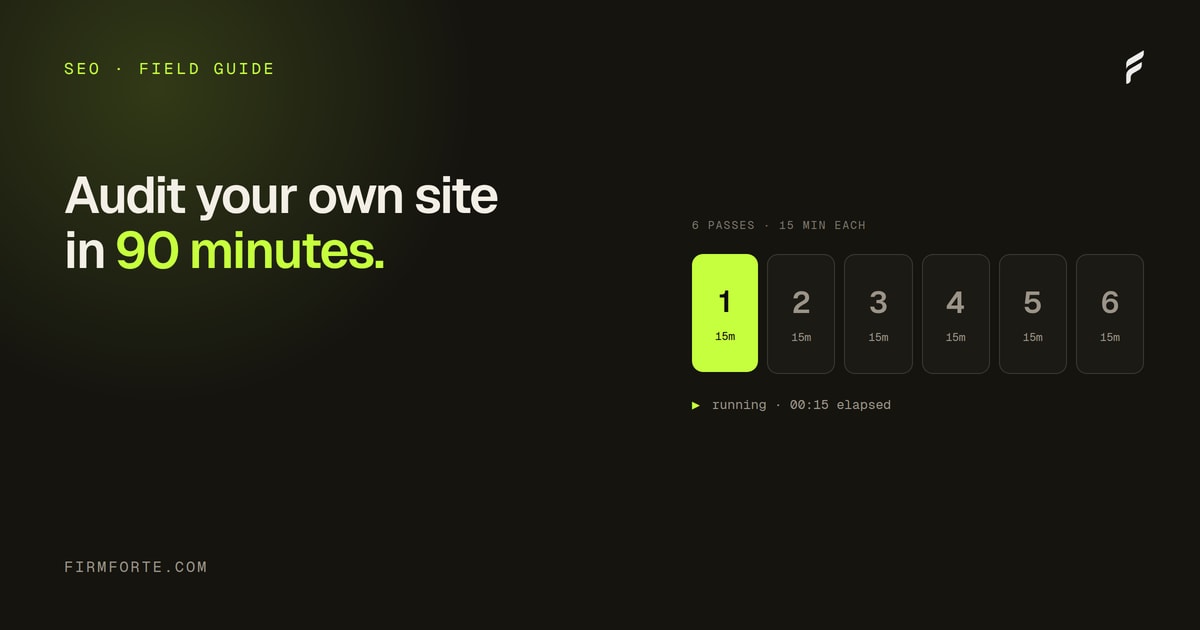
Here's the practical test for whether to stay the course or fire your agency. By the end of the first quarter, you should be able to see impressions up and to the right, a batch of new pages indexed and ranking somewhere, and at least a handful of terms on page one. If three months in, the graphs are flat and the only "report" is a list of tasks completed, the work isn't landing. That's a different problem from SEO being slow, and it's the one to act on. Our 90-minute law firm SEO audit walks through checking this yourself.
What does a realistic first year look like?
Rough shape for a small firm starting from a decent but underoptimized site. Competitive markets slide toward the slower end.
| Window | What's happening | What you should see |
|---|---|---|
| Months 1-2 | Technical fixes, schema, page and content foundation | Slight impression movement, pages indexed |
| Months 3-4 | Early rankings climb, quick on-page wins | Long-tail terms on page one, first organic form-starts |
| Months 5-6 | Momentum builds, more terms reach the top | Visible traffic, occasional qualified call |
| Months 6-9 | Rankings firm up, authority compounds | A steady trickle of organic cases |
| Months 9-12 | Compounding returns on content and links | Organic becomes a reliable channel |
None of this changes the math on lock-ins. If an agency promises fast results and also insists on a twelve-month contract with no exit, the contract is doing the work the results can't. Real SEO takes six to twelve months to pay off, which is exactly why a confident shop offers a short out instead of a long leash. We break down the tiers and what each should include in law firm SEO pricing for 2026, and the full method, including the do-it-yourself path, in the complete law firm SEO guide. If you'd rather see where your firm stands right now, the SEO service starts with the same free review as everything else.
Questions we get about this
-
How long does law firm SEO take to show results?
Expect movement in local visibility within weeks and meaningful organic ranking over six to twelve months, longer in competitive practice areas and large markets. The variance is real and depends on your starting point, your competition, and how much of the foundation is already in place — a firm fixing a blocked crawler moves faster than one starting from nothing. Judge the first quarter on leading indicators rather than rankings. Anyone quoting front-page results in sixty days is either not competing for anything valuable or not being straight with you.
-
Why does SEO take so long for law firms?
Because legal is a YMYL category where the trust threshold is high, and trust signals take time to accumulate and be confirmed. Some of the work is slow by nature: third-party corroboration depends on other people, and content depth can't be shortcut without becoming thin. Competition matters too — you're not waiting on a clock, you're waiting to overtake firms who started earlier. The parts that are fast, like technical fixes and the Google Business Profile, are fast precisely because they don't depend on anyone else.
-
How can I tell SEO is working before the cases arrive?
Watch impressions and ranking position for your target queries, local pack visibility, and whether new pages are being indexed and picked up at all. Those move before calls do, and they tell you whether the work is landing or not. Track them from the start so you have a baseline rather than a vague sense that things feel slow. If none of them have moved by the end of the first quarter, that's a conversation to have with whoever is doing the work.
-
What makes law firm SEO faster or slower?
Faster: an existing site with clean technical foundations, an uncontested or narrow practice area, a smaller market, and a firm that answers questions and approves content promptly. Slower: a locked platform you can't edit, a saturated practice area in a major metro, an inconsistent entity footprint to untangle first, and approval cycles measured in weeks. The client-side factors matter more than firms expect — the single most common cause of a slow engagement is content waiting on review.