
The short answer
Estate planning clients aren't in a crisis, which changes everything: the research is unhurried, often prompted by someone else's death or a life event, and the decision is frequently made with a spouse. Referral relationships with financial advisors and accountants matter more here than in almost any other practice area, and content that explains process and cost does more than urgency ever will.
Estate planning marketing runs on trust and education, not urgency. Your client isn't in a crisis and isn't in a hurry; they're a 45-to-75-year-old who has been putting this off for years and needs to be reassured and informed before they'll finally book. So the marketing that works is patient and educational: SEO that catches them when they start researching, content that answers the questions they're embarrassed to ask, referral relationships with the advisors they already trust, and a local presence for the moment they're ready.
Get that mix right and estate planning becomes a steady, referable practice instead of a feast-or-famine one. Here's how the pieces fit.
How is estate planning marketing different from other practice areas?
There's no emergency driving the decision. A personal injury client needs a lawyer now, and a divorce client is in the middle of a crisis. An estate planning client has a task they know they should do and can keep avoiding forever. That changes the whole job: you're not competing to be chosen in a moment of urgency, you're overcoming procrastination and building enough trust that someone acts on something they'd rather not think about.
That distinction reshapes everything downstream. Aggressive, urgent advertising, the kind that can work for injury or criminal defense, mostly falls flat here, because there's no emergency for it to catch. What moves an estate planning client is the opposite register: calm, educational, reassuring, positioning you as the knowledgeable guide who makes an uncomfortable subject feel manageable. The same instinct that works for a frightened family law client, which we cover in marketing for family law firms, applies here in a lower key: meet people where they are emotionally, not where a sales funnel wants them to be.
Who is the estate planning client, actually?
Older than most legal clients, and often acting on behalf of someone else. A potent segment is the "sandwich generation," adults roughly 45 to 60 caring for aging parents while raising their own kids, who are stressed and afraid of making a costly mistake. Alongside them: pre-retirees and retirees 55 to 75, business owners needing succession plans, and the recently widowed or divorced.
Knowing the demographic changes where and how you reach them, and it's laid out well in 12AM Agency's guide to marketing a retirement and estate planning practice. These are people with real assets and real anxiety about protecting them, which makes them excellent long-term clients, but they research carefully and move slowly. Many are triggered into action by a life event: a parent's decline, a diagnosis, a friend's messy probate, a new grandchild. Your marketing's job is to be there, trusted and findable, when that trigger hits, because it rarely announces itself in advance.
How do estate planning clients find a lawyer?
Through a blend of search, referral, and education, weighted more toward referral than most practice areas. They search "estate planning attorney [city]" and "living trust lawyer near me" when they're ready to act, they ask their CPA or financial advisor who to call, and they respond to seminars and educational events that let them learn before they commit. For the older end of the range, even direct mail still pulls.
The hybrid nature is the key insight. Search engine optimization captures the high-intent moment when someone types "estate planning attorney near me" ready to book, and educational content captures them earlier, while they're still learning. But referrals from trusted advisors carry outsized weight here, because an estate plan touches money the client is already discussing with a CPA or financial planner. Industry guidance on estate planning client acquisition consistently points to that same blend: be findable in search, be educational in content, and be referable to the professionals your clients already trust.
What content actually works for estate planning?
The patient, educational kind that answers the questions people are quietly anxious about. "What happens if you die without a will in [state]?" "What's the difference between a will and a trust?" "Do I need probate?" Write the clear, jurisdiction-aware answer to each, with the answer up top, and you meet the researcher at the exact point they're deciding whether this is manageable and who can help.
This is answer-first content, and estate planning is well suited to it because the questions are so consistent and so searched. Each real question becomes a page: the question as the heading, a direct answer immediately beneath, then the detail and the "here's when to talk to an attorney." The tone matters more here than in any other practice area, because your reader is anxious and avoidant, and a page that lectures or upsells sends them back to procrastinating. A page that calmly explains and quietly reassures moves them toward booking. The same structure makes your content legible to AI engines, the way we describe for other practices, but the emotional register (educator, not salesman) is what actually converts the estate planning reader.
Why do referral relationships matter so much here?
Because an estate plan sits inside a client's broader financial life, and the people managing that life are natural referral sources. CPAs, financial advisors, and insurance agents are already talking to your ideal client about money, retirement, and risk, and estate planning is the adjacent piece they can't handle themselves. Becoming the attorney they trust to refer is one of the most durable pipelines in this practice area.
This is what breaks the feast-or-famine cycle that plagues estate planning practices that rely on marketing alone. By positioning yourself as an educator and a reliable partner to the CPAs and financial planners in your area, you build a referral stream that doesn't switch off when your ad budget does. It compounds, too: advisors refer repeatedly once they trust you, and a good outcome for one shared client earns the next referral. Content plays a role even here, because the educational material that reassures clients also gives referring advisors something credible to point to, reinforcing that you're the safe hands they thought you were.
Where do local search and reviews fit?
They catch the ready-to-act client and reassure the careful one. When someone finally searches "estate planning attorney near me," the map pack answers before your website does, so your Google Business Profile and reviews decide whether you're in the running. For an older, risk-averse client, a solid set of genuine reviews is exactly the trust signal that turns research into a call.
So estate planning marketing, like family law, runs on two tracks that reinforce each other: the educational content and referral relationships that build trust upstream, and the local presence that captures the client at the moment of decision. Set the local foundation up properly, starting with the right category and a healthy review profile, as covered in the full Google Business Profile guide. To see where estate planning clients are currently searching past your firm, run the free review, and the ongoing content and local work lives in our SEO service.
Questions we get about this
-
How is estate planning marketing different from other practice areas?
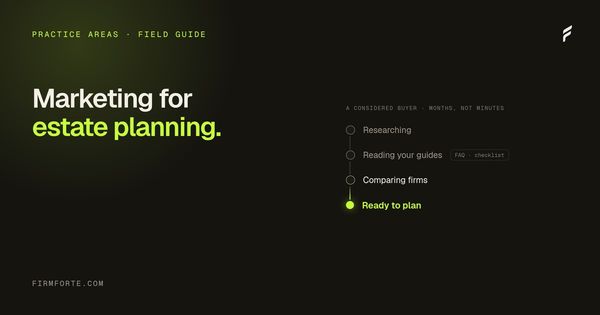
There's no emergency, so nothing about urgency works. Clients research over weeks or months, often prompted by a death in the family, a new child, or a birthday that made them think about it, and they usually decide with a spouse rather than alone. That means the material has to survive being read twice and discussed, which rewards clarity about process and cost over persuasion. It also means the window between first search and first call is long enough that being findable throughout matters more than being first.
-
Who is the estate planning client?
Usually someone with something to protect and a recent reason to think about it — a house, a business, minor children, a blended family, or a parent who just died without a will. They're rarely in distress but frequently uncomfortable, because the subject is mortality and family money. They're also often comparing you to a cheap online option, which means part of the job is explaining what a lawyer does that a form doesn't. Write for someone thoughtful, not someone panicked.
-
What content works for estate planning attorneys?
Plain explanations of what the documents do, what the process looks like, what it costs, and what happens if you do nothing. The comparison against DIY services deserves an honest page rather than a dismissal — the reader is already considering it, and pretending otherwise loses them. Answer the questions people are slightly embarrassed to ask, like whether they have enough to need a will at all. Concrete beats comprehensive here.
-
Why do referral relationships matter so much in estate planning?
Because financial advisors, accountants, and insurance professionals are talking to your future clients about the exact circumstances that create the need, often before the client thinks to search. Those relationships compound and are far less contested than search rankings in most markets. Search work still matters, since a referred client will look you up before calling. Treat the two as one funnel rather than competing channels.