
The short answer
SEO genuinely does take months, which is the real argument for a minimum term — and it isn't an argument for a twelve-month lock-in. The difference is what happens at the end of the term: a minimum term commits you to a period of work, while a lock-in adds auto-renew, a cancellation penalty, and a site you don't own. The first protects the work. The second protects the agency's revenue.
A 12-month marketing contract almost always protects the agency, not you. The pitch for it is that SEO takes time, which is true. But needing time to show results and demanding a locked year with early-termination penalties are two different things. One is honesty about how the work unfolds. The other is a hedge against the work being bad, dressed up as the first. A genuinely confident agency doesn't need the cage, because it's betting you'll want to stay.
Here's how to tell the honest version from the trap, and what to ask for instead.
Why do agencies want a 12-month contract?
They'll give you two reasons, and there's usually a third they won't. The stated reasons are that SEO needs a year to work, and that onboarding a new client costs them upfront so they need commitment to recoup it. Both have a grain of truth. The unstated reason is revenue certainty: a signed year means guaranteed income regardless of whether the results ever show up.
That third reason is the one that actually drives the term, and it's worth naming plainly. From the agency's side, a 12-month lock turns an uncertain client relationship into a predictable line of revenue, which is great business for them and a transfer of risk onto you. You take on the risk that the work underperforms; they keep the certainty that they get paid either way. When the incentive is structured so the agency is paid whether or not it delivers, you've lost the main thing that keeps a vendor sharp: the ability to leave if they don't.
Isn't it true that SEO takes time?
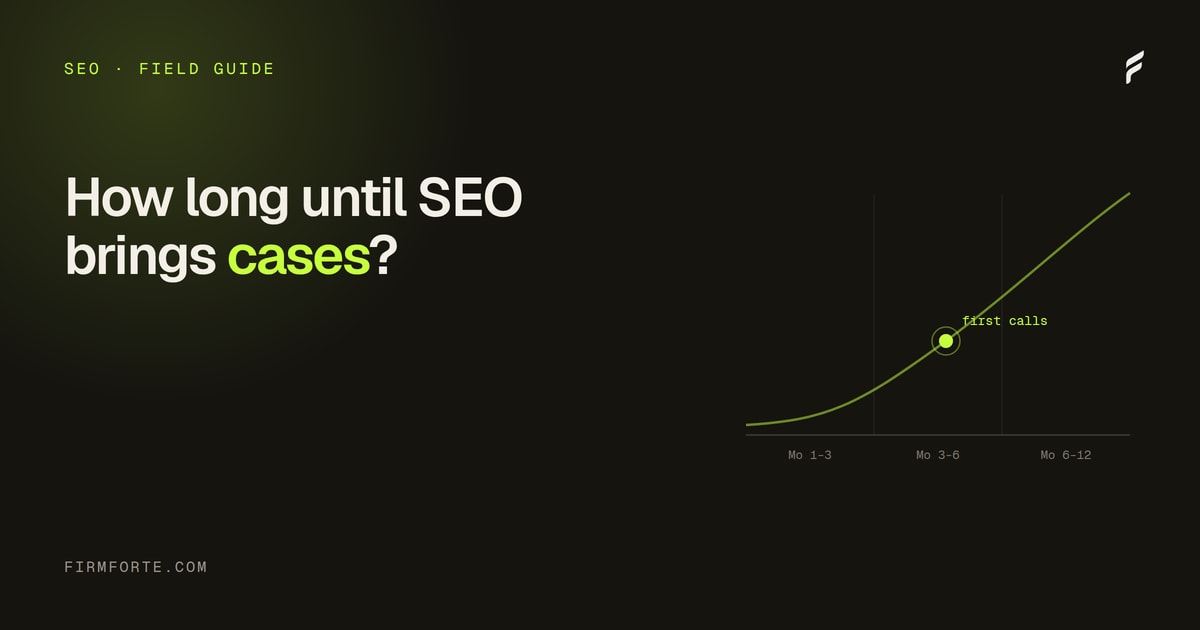
Yes, and that's exactly why the penalty-backed lock is a non-sequitur. Real SEO does take roughly six to twelve months to turn into signed cases, which we break down in how long law firm SEO takes to bring in cases. But that fact argues for your patience, not for the agency's penalty clause. You can be patient without being trapped.
Here's the tell that separates the two. A confident agency says: "This takes months, so give us a fair shot, and here's a 90-day out if we're not delivering." That's an agency betting on its own work. A less confident one says: "This takes months, so you're committed for a year with a fee to leave early." That's an agency protecting itself against you noticing it isn't working. The timeline is the same in both cases. The difference is entirely about who carries the risk of failure. If the work is good, the agency has no reason to fear a short exit, because you won't take it.
Who does the lock-in actually protect?
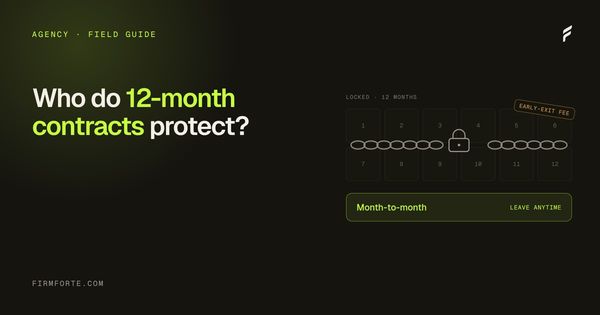
The agency, on both ends. On the upside, a long contract guarantees revenue whether performance is good, mediocre, or bad. On the downside, it removes your only real recourse, which is the ability to walk away when you're unhappy. A firm three months into a year-long contract with a stalling agency has no move except to keep paying and wait, which is precisely the position the contract was designed to create.
Think about what a lock-in changes about the relationship. Without it, the agency has to keep earning your business every month, because you can leave. With it, that pressure evaporates the moment you sign, and your account can quietly slide down the priority list behind clients who might still churn. The contract that "protects the investment" mostly protects the agency's ability to underdeliver without consequence. You're the one who paid for the investment, and you're the one who can't act on it going wrong.
What's the difference between a minimum term and a lock-in?
A short minimum term is reasonable; a long, penalty-backed, auto-renewing lock is not. Asking a client to commit for, say, three months so real work can start is a fair request, because meaningful SEO can't show anything in three weeks. A twelve-month term that renews automatically unless you cancel in a narrow window, with a fee to leave early, is a different animal entirely.
The line is roughly where the term stops being about doing the work and starts being about keeping you. Our own retainers, for reference, are month-to-month with a cancel-after-month-three minimum: enough runway for the work to begin showing, short enough that we have to keep earning it. That structure is on the pricing page. Compare any agency's term against that shape. A short minimum with a clean exit is a partner confident in its work. A long lock with penalties is a vendor building itself a safety net at your expense.
What should you look for in the contract?
Read the four clauses that decide how trapped you are: term length, auto-renewal, the notice window to cancel, and any early-termination penalty. These live in the back half of the contract that everyone skims, and they're where the real deal is, as we cover in the hidden fees legal agencies bury in contracts. A friendly monthly price attached to a brutal exit clause is a bad deal wearing a good number.
Watch especially for auto-renewal with a short cancellation window, the clause that quietly rolls you into another full year unless you remembered to cancel in a specific 30-day slot. That one catches busy lawyers constantly. If a contract has a long term, an auto-renew, and an early-termination fee stacked together, you're not hiring a partner; you're signing up for a subscription that's engineered to be hard to cancel. Get every one of those terms in writing and understood before you sign, not after.
What should you ask for instead?
Month-to-month, or a short minimum with a clear, penalty-free out. Frame it plainly to any agency: "I'm happy to be patient because I know this takes time, but I want to be free to leave if it's not working." A confident agency welcomes that, because it plans to keep you by delivering, not by contract. An agency that can't offer anything but a locked year is telling you what it thinks of its own results.
If you're weighing an agency right now, run this against the rest of the decision, because the contract is only one of the lock-ins, alongside the platform and the accounts, that we lay out in how to choose a law firm marketing agency without getting locked in. And if you're already stuck in a year you regret, the clean way out is in how to leave your law firm marketing agency cleanly. The best marketing relationship is one you're always free to end and never want to. To get an honest read on where you stand before committing to anyone, the free review comes with no contract at all, and our posted terms are on the pricing page.
Questions we get about this
-
Why do marketing agencies want a 12-month contract?
The stated reason is that SEO takes months to show, which is true. The unstated reason is revenue predictability — a twelve-month term with auto-renew converts an uncertain relationship into a forecastable one regardless of results. Both can be true at once, which is why the term length alone doesn't tell you much. What tells you is whether leaving at the end is easy or expensive.
-
What's the difference between a minimum term and a lock-in?
A minimum term says the work needs a certain period to be judged fairly; a lock-in makes leaving costly after that period is over. The tells for a lock-in are auto-renew that requires notice to stop, a cancellation fee, and a website or platform you can't take with you. A three- or six-month minimum on ongoing work is reasonable and common. Twelve months with all three lock-in features attached is a different product wearing the same words.
-
Should a law firm ever sign a 12-month marketing contract?
Only if you'd sign it without the auto-renew and the exit penalty, which is the test worth applying. If the work genuinely needs a year and the agency is confident, they should be willing to make month thirteen onward month-to-month and let you leave with your site. Where that's refused, the length is doing something other than protecting the work. Our own retainers cancel after month three, which is roughly where the honest version of this argument lands.
-
What should I ask for instead of a long contract?
A short minimum term, month-to-month afterward, ownership of the site and content on payment, and no penalty for leaving. Ask for those four in the agreement rather than as reassurances on a call. An agency confident in its work loses little by agreeing, because clients who are getting results don't leave. The reaction to the request tells you more than the answer does.