
The short answer
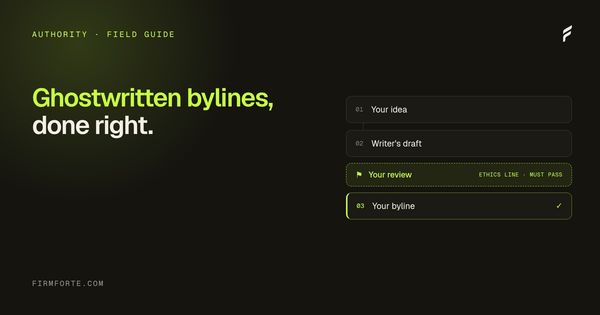
Ghostwriting under an attorney's byline is fine on one condition: the attorney genuinely reviews the piece, adopts it as their own, and stands behind it as accurate. A lawyer publishing something a writer helped produce that reflects their real expertise is accepted practice everywhere. Publishing under a name attached to someone who never read it is a different thing, and it fails on ethics and on E-E-A-T at the same time.
Ghostwritten bylines are fine, with one condition: the attorney has to genuinely review the piece, adopt it as their own, and stand behind it as accurate. A lawyer publishing an article under their name that a writer helped produce, but that the lawyer actually reviewed and that reflects their real expertise, is accepted practice across every profession. The ethics line is crossed only when the byline is a fiction, content the attorney never read, that doesn't reflect their knowledge, or that's undisclosed AI filler wearing a lawyer's name.
Here's where that line actually sits, for both the bar rules and the authority the byline is supposed to build.
What is a ghostwritten byline, and is it ethical?
A ghostwritten byline is a piece that someone else drafted, published under the named attorney's authorship. And yes, it's generally ethical, with the condition that the lawyer approves it and takes ownership. This is standard across industries: CEO columns, thought-leadership pieces under senior partners' names, expert articles, most involve a professional writer, and that's accepted as long as the named person genuinely stands behind the content.
For lawyers specifically, the guidance is reassuring but conditional. According to the chair of the ABA's Standing Committee on Ethics and Professional Responsibility, ghostwriting a blog post for a law firm isn't inherently problematic if the lawyers approve it, adopt it as their own, and the content complies with the lawyer advertising rules. So the practice isn't the issue. The condition is. A ghostwritten byline is legitimate when the attorney is genuinely the author in the sense that matters: they reviewed it, they agree with it, and it's accurate. It's a problem when that ownership is missing.
Where's the ethics line for lawyers?
The line runs through ABA Model Rule 7.1: nothing about your firm's communications can be false or misleading, and that reaches content published under an attorney's byline. A ghostwritten piece the lawyer actually reviewed and adopted, and that's truthful, is on the right side of it. A piece the lawyer never read, that misstates the law, or that makes claims the attorney can't stand behind, is on the wrong side, byline or not.
So the practical test is ownership and accuracy, not who typed the words. The attorney has to read the piece, confirm it's legally accurate, make sure it doesn't promise results or mislead in the ways Rule 7.1 prohibits, and genuinely adopt it as their own statement. Do that, and the fact that a writer drafted it is irrelevant to the ethics. Skip it, publish under your name something you never reviewed, and you've made a communication about your services that you can't vouch for, which is exactly what the rule is built to prevent. The byline is a form of authorship, and authorship carries responsibility for what's said.
How does ghostwriting square with Google's E-E-A-T?
It squares fine when the attorney's real expertise is genuinely behind the piece, and poorly when it isn't. Google's quality framework rewards content attached to identifiable, credentialed experts, which is the whole point of an attorney byline. A ghostwritten article that captures the lawyer's actual knowledge and experience satisfies that; the expertise is real, a writer just helped express it. A generic piece slapped under a lawyer's name that could have been written about any firm anywhere doesn't, because there's no real expertise in it to reward.
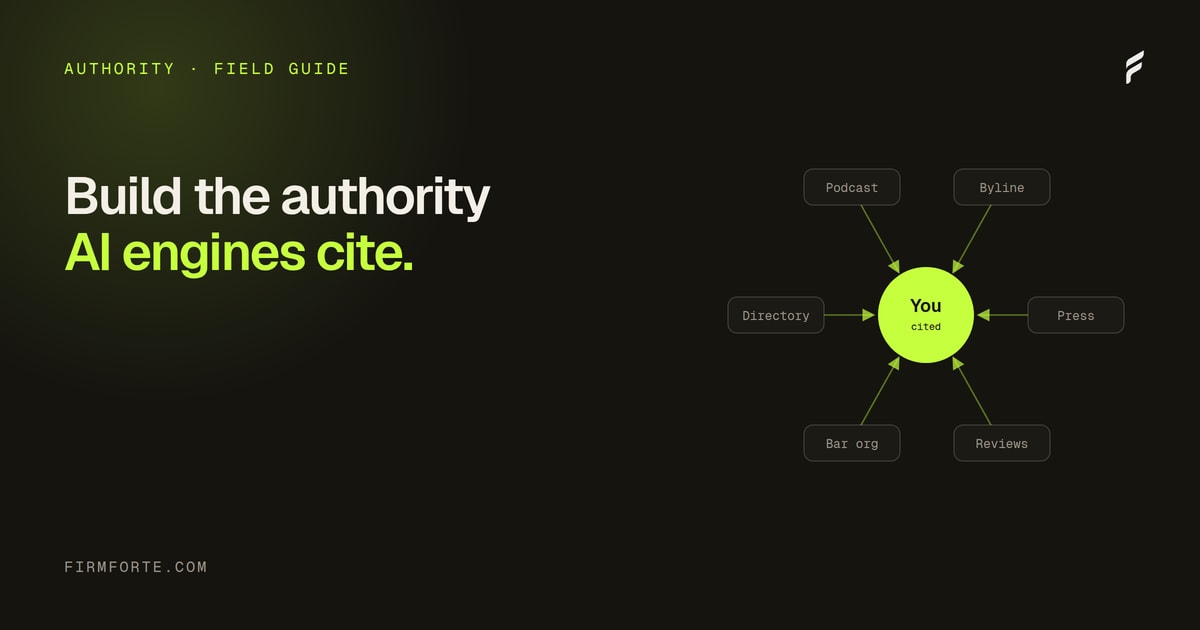
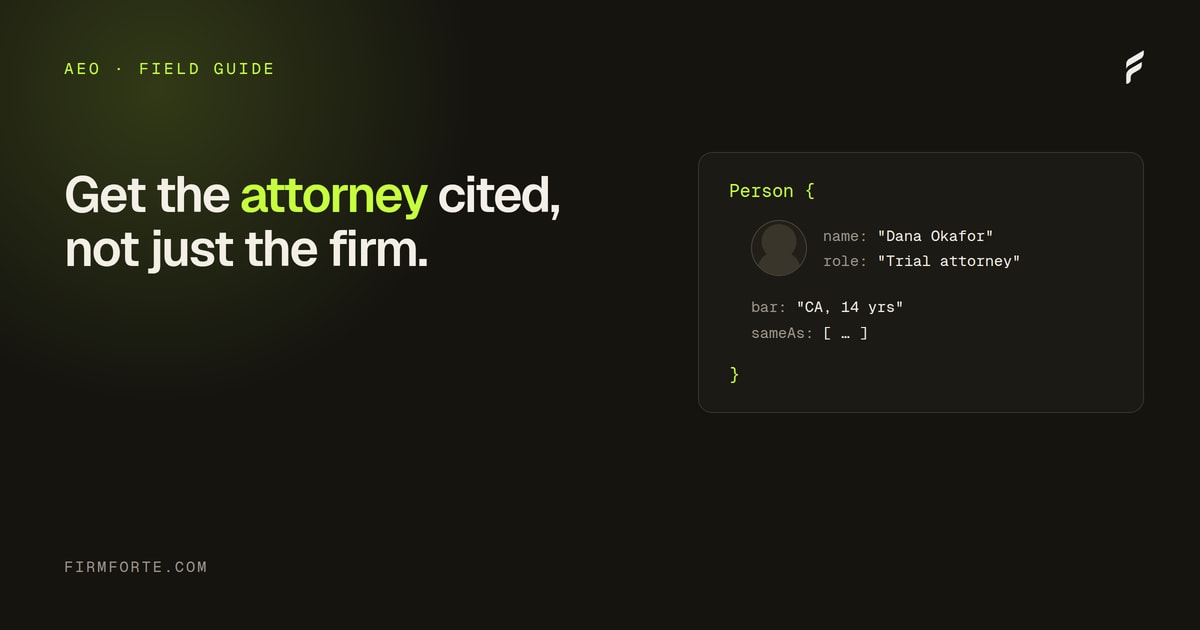
This is the same standard that runs through all authority work, laid out in how attorneys build the authority AI engines actually cite: engines and clients are both looking for evidence that a real, accountable expert stands behind the content. A byline is a claim that one does. Ghostwriting keeps that claim honest as long as the named attorney's genuine knowledge shaped the piece. It hollows the claim out when the byline is decoration on content the attorney had nothing to do with. The markup layer that makes the authorship legible, tying each piece to a credentialed person, is the subject of Person schema for attorneys, but the schema only helps if the authorship is real.
What about AI-written content under an attorney's name?
That's the modern version of the same problem, and it's where the line gets crossed most often now. Publishing AI-generated content under an attorney's byline, without the lawyer genuinely reviewing and adding real expertise, is exactly the hollow authorship the rules and the engines are built to catch. Ghostwriters themselves broadly agree that using AI to generate material without disclosing it is unethical, and Google's recent updates have leaned hard on filtering out generic, authorless content.
The distinction that matters isn't human-versus-AI in the drafting; it's whether real expertise and genuine review stand behind the final piece. A lawyer who uses tools to help draft, then substantively reviews, corrects, and adds their actual professional judgment, has produced legitimate authored content. A firm that mass-generates articles and drops attorney names on them has produced the thing engines increasingly penalize and that puts the lawyer's Rule 7.1 obligations at risk, because they're now the author of statements they never checked. The web is flooding with this, which is exactly why genuine, reviewed, expert-backed content stands out more than ever.
How do you ghostwrite an attorney byline the right way?
Make the writer a scribe for the lawyer's real expertise, not a substitute for it. The right process starts with the attorney's genuine knowledge: interview them, capture their actual take and real experience on the topic, then draft from that. The lawyer reviews, edits, corrects anything inaccurate, and approves the final piece as their own. The writing is assisted; the expertise and the ownership are the attorney's.
That's the version that's both ethical and effective, because the finished article genuinely reflects a credentialed expert, which is what earns authority and satisfies the bar rules at once. It takes more of the lawyer's time than rubber-stamping generic copy, and that time is the point, it's what makes the byline real. This is the same instinct behind building a real attorney personal brand: the authority comes from an actual person's actual expertise, and ghostwriting is only a tool for expressing it more efficiently, never a way to fake it.
Why bother with bylines at all?
Because named, credentialed authorship is one of the highest-return authority moves a firm can make. Attributing your content to real, identifiable attorneys with genuine credentials is exactly what search and AI engines reward, and it's the difference between content that reads as expert and content that reads as anonymous filler. A well-run byline program, ghostwriting-assisted or not, builds the authority that gets a firm ranked and cited.
So the answer isn't to avoid ghostwriting; it's to do it honestly. Put your attorneys' names on content their expertise genuinely shaped and they genuinely reviewed, keep it truthful under Rule 7.1, and you build real authority the honest way, which is the only way that lasts. It pairs with the E-E-A-T foundations in E-E-A-T for law firms and the earned-mention work in getting quoted in legal trade press. Authority can't be faked, only expressed, and ghostwriting done right is just a better way to express the real thing. To see whether the engines currently treat your firm as a credible, authored source, run the free review, and the ongoing authority work is the heart of our digital PR service.
Questions we get about this
-
Is it ethical for an attorney to publish ghostwritten content?
Yes, provided the attorney actually reviews it, adopts it as their own, and stands behind its accuracy. That's the same standard applied to ghostwriting across every profession, and it's what separates legitimate help from misattribution. The failure case is a byline on something the named attorney never read, which is a misrepresentation regardless of how accurate the content happens to be. The review step is the whole ethical content of the practice, so it can't be the step that gets skipped.
-
Does ghostwriting hurt E-E-A-T?
Not when it's done properly, because E-E-A-T is about whether the expertise behind the content is real and verifiable, not about who typed it. A piece genuinely reviewed and adopted by a named, credentialed attorney carries that attorney's expertise. What does hurt is a byline nobody can verify, an author with no corroborating record anywhere, or content whose claims the named person plainly wouldn't make. The signal an engine can check is the author's existence and credentials, not the drafting process.
-
What about AI-written content under an attorney byline?
The same condition applies and it's harder to meet, because AI output is fluent enough to pass a skim while being wrong. An attorney putting their name on it is representing that they've checked it, which for legal content means verifying every citation, deadline, and statement of law rather than reading for tone. If that review isn't happening, the byline is a misrepresentation and the accuracy risk is real. Use it as a drafting tool if it helps; don't let it change what the byline means.
-
Why use attorney bylines at all?
Because a named, credentialed author is something an engine and a reader can both verify, and firm-voice content is neither. A byline lets you attach a Person entity with bar records and publications behind it, which is corroboration a corporate byline can't produce. It also makes the content accountable, which tends to make it better. The requirement it creates — that a real attorney reads and stands behind it — is the point rather than the cost.