

The short answer
An engine reading an attorney bio is trying to answer one question: is this a real, credentialed person it can safely name? Seven signals decide that — the name used consistently, the bar admissions, the years and jurisdiction, verifiable outside references, Person schema, a real photograph, and whether anything on the page contradicts what's elsewhere. Fix them in that order.
Most attorney bios are written for one reader: a nervous person deciding whether to call. That's the right instinct, and it produces a page that opens with a paragraph about dedication and commitment, mentions decades of experience without naming a case, and closes with a contact form.
An AI engine reading that page finds almost nothing it can use. Not because the attorney isn't credible, but because credibility that isn't stated in checkable terms doesn't survive the trip through a machine. The engine isn't looking for reassurance. It's looking for facts it can attach to a name.
Seven things separate a bio an engine can work with from one it can't. You can check all seven by hand in about ten minutes, and our free attorney bio checker will run the same seven against any bio URL if you'd rather not do it manually.
What an engine is actually trying to do
When someone asks an AI engine for a lawyer, the engine has to answer a question underneath the question: does this named person exist, and can I say anything specific about them without making it up?
Engines are heavily tuned against inventing details about real people, and legal sits in the category where that caution runs highest. Faced with a bio that says "a dedicated advocate with years of experience," an engine has two options. Repeat a phrase that says nothing, or name a different attorney whose page gave it something concrete. It usually does the second.
So the goal of a bio audit isn't to make the page more impressive. It's to make it more quotable. Every fix below converts a claim into something an engine can lift and attribute.
The seven signals
One: Person schema. Structured data that declares this page is about a person, names them, and describes what they do. Without it, an engine has to infer from prose that the page is a biography at all. With it, the page announces itself. The full field-by-field version, with code, is in Person schema for attorneys. For the audit, you only need to know whether it's there and whether it names the right person.
Two: a named attorney. An actual human name in the heading and the body, not "Our Attorney" or "The Firm." This sounds too obvious to check, and it fails more often than you'd expect on small-firm sites where the bio page is titled by role. An engine cannot cite a person it cannot name.
Three: bar admissions. Which bar, admitted when. This is the single most verifiable fact about a lawyer, it's public record, and leaving it off a bio is leaving the easiest corroboration on the table. It also does something subtle: a page that names a specific state bar anchors the attorney to a jurisdiction, which is most of what a location-shaped query is asking about.
Four: legal education. The law school, named. Not "graduated with honors" — the institution. Schools are strong, well-known entities in their own right, and connecting an attorney to one borrows some of that recognition. Note that undergraduate detail does almost nothing here; the JD is the one that matters.
Five: enough text to be worth reading. There's a floor below which a bio is a stub rather than a biography. Somewhere under about 150 words there's simply nothing to extract. Somewhere north of 350 there's usually enough substance that an engine can find a specific sentence worth quoting. The number isn't magic and padding won't help — a 400-word bio of adjectives is no better than a 100-word one. But depth is where specifics live, and specifics are the point.
Six: a direct way to reach them. A phone number or email on the bio itself, not only a site-wide contact form three clicks away. This is partly a conversion argument and partly a credibility one: a real, contactable person reads differently from a name on a roster.
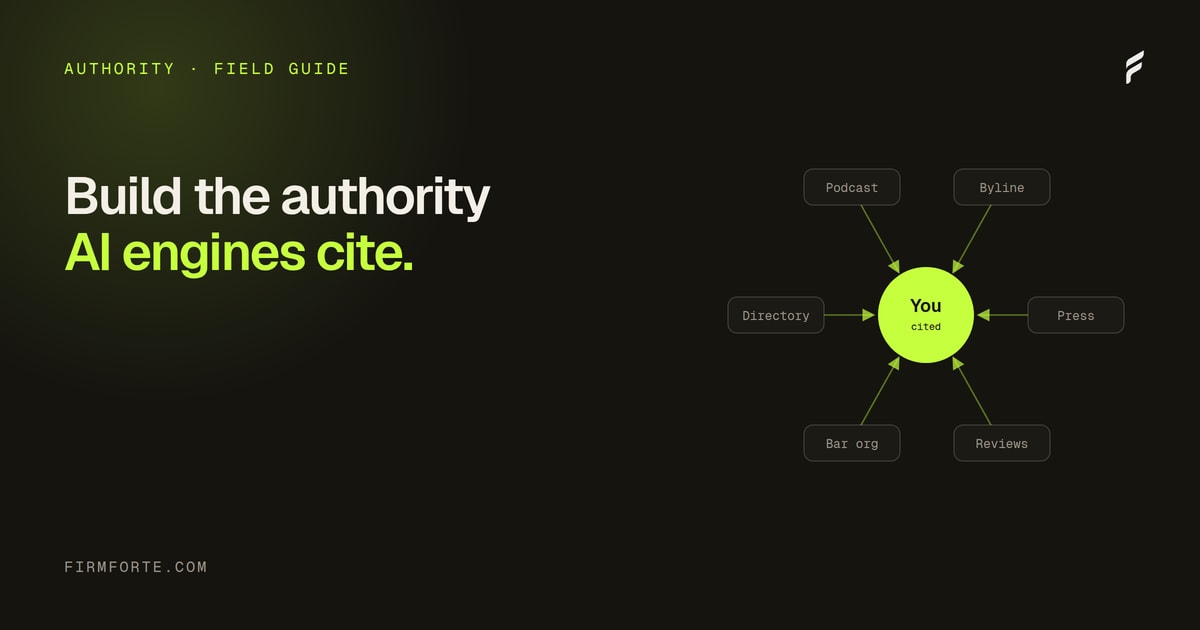
Seven: profiles that corroborate. Links from the bio out to the attorney's LinkedIn, state bar profile, Avvo, Justia, Martindale, or a Google Scholar page. This is the one most firms skip, and it's the one that does the most work, because it's the only signal on the list that isn't just your site vouching for itself. Corroboration from somewhere you don't own is worth more than anything you can write about yourself. The broader version of that argument is in how attorneys build authority AI engines cite.
What the same fact looks like in each register
Written for reassurance
nothing to extract
"A seasoned litigator with decades of courtroom experience"
"Educated at a top law school"
"Licensed and in good standing"
"Recognized by his peers"
Written to be quotable
every clause checkable
"Has tried 47 cases to verdict, 11 of them in federal court"
"JD, University of Michigan Law School"
"Admitted in Ohio, 2011; Southern District of Ohio, 2013"
Linked state bar profile and LinkedIn
Check whether the engines know the attorney at all
Before fixing anything, get a baseline. Ask an engine directly about the attorney and see what comes back. An answer that hedges, or that confidently describes a different lawyer with a similar name, tells you the page isn't doing its job.
Try this yourself
Does an AI engine know who this attorney is?
Who is [attorney name and city]? What law school did they attend, where are they admitted, and what do they practice? If you don't know, say so.
Opening a link sends the prompt to that company, the same as typing it there yourself. Nothing is sent to us.
The "if you don't know, say so" clause matters. Without it, you're inviting the engine to fill gaps, and a plausible invention will read to you like a pass. You want the honest answer, including the honest blank.
The order to fix them in
The seven aren't equal, and they aren't independent. Work down this list rather than across it.
- Put the attorney's actual name in the H1 and the first sentence. Nothing else on this list matters if the page never names the person.
- Add bar admissions with jurisdictions and years. Public record, zero risk, highest ratio of value to effort on the page.
- Add the law school by name, with the degree.
- Link out to the state bar profile and LinkedIn at minimum. Add Avvo, Justia, or Martindale if the attorney already has profiles there — claim them first if the details are wrong or stale.
- Put a direct phone number or email on the bio itself.
- Rewrite the body so that every paragraph contains at least one checkable fact. If a sentence would be equally true of any lawyer in the state, it's filler.
- Ship Person schema last, once the visible content is settled, so the markup describes what's actually on the page.
Schema goes last for a reason worth stating plainly. Structured data that accurately describes a vague bio is still a vague bio. Its job is to remove ambiguity about good content, not to compensate for thin content. Doing it first means writing it twice.
What this won't do
A well-built bio makes an attorney legible to an engine. It does not make the engine cite them, and anyone telling you otherwise is selling something. Citation depends on corroboration from sources you don't control, on how much competition exists for the query, and on how the engine happens to weight things that week.
What you can reasonably expect is narrower and still worth having: when an engine does encounter your attorney, it finds a name it can state, a jurisdiction it can place them in, credentials it can verify, and at least one source other than you that agrees. That's the difference between being skippable and being usable. It's also, not coincidentally, what a human reader wants from the same page.
If you want the seven run against your own bios without doing it by hand, the attorney bio checker is free and takes a URL. If you'd rather we looked at the whole site instead of one page, send us the domain.
Questions we get about this
-
What makes an attorney bio work for AI search?
Being verifiable rather than being impressive. An engine can't judge whether a lawyer is good, so it checks whether the person is real and credentialed: is the name used consistently, are the bar admissions stated, does an outside record confirm them, is there structured data identifying the person. A bio full of adjectives and no checkable facts gives an engine nothing to work with. Write it so a stranger could confirm three things without leaving the page.
-
What should an attorney bio include?
The attorney's name in the same form used everywhere else, bar admissions with jurisdictions, years in practice, what they actually handle, and links out to independent records — the bar profile, publications, speaking engagements, association memberships. Add Person schema carrying the same facts, with a sameAs pointing at those records. A real photograph helps a reader, and using the same one across the web helps consistency. Everything on the page should match what's true elsewhere.
-
How do I check whether engines know my attorneys at all?
Search the attorney's full name plus the city or practice area in an AI engine and see whether anything comes back that's actually them. Then search the name in quotes on Google and count how many of the first results are pages you don't control. A name with no independent footprint is a weak entity, and no amount of on-site markup fixes that. That count is the number to grow, and it's the honest measure of where you stand.
-
What won't fixing an attorney bio do?
It won't produce citations on its own, and it won't make an attorney with no external footprint into a recognized entity. The bio makes your claims legible and consistent; corroboration has to come from elsewhere — bar records, press, publications, speaking. What the fix does reliably is remove reasons to be skipped: ambiguity, contradiction, and missing credentials. Treat it as clearing the floor rather than as the lever.